


“The most expensive thing you can do is trust a process you don’t understand.” – Anonymous
The Day Amara Counted the Cost
Amara had been working in Canada for three years. She was proud of what she had built a steady income, a small savings routine, and the ability to send money home to her mother in Lagos every month. It was the part of her life she looked forward to the most. The moment her mother confirmed the money had arrived was the moment Amara felt the distance between them shrink. But in February 2026, something changed.
Her mother called, confused. “Amara, the money that came it is not complete. Something is missing.” Amara frowned and pulled up her bank app. She had sent exactly what she always sent. She checked the receipt. The amount had left her account cleanly. So where had it gone?
She spent the next two hours on hold with her bank, refreshing screens, cross-checking exchange rates on three different websites. By the end of it, she had a partial answer but more questions. There had been a transfer fee. Then a correspondent bank fee. Then a currency conversion margin built quietly into the exchange rate itself. Three separate deductions. None of them clearly disclosed. Not one of them had appeared on her confirmation screen when she hit “Send.”
That night, Amara sat at her kitchen table and did the maths. Over three years of monthly transfers, she had lost hundreds of dollars to fees she had never knowingly agreed to pay. She was not angry at her mother. She was not angry at herself. She was angry at a system that had been designed to be difficult to understand and she was determined to find a better way.
What Are Hidden Transfer Fees, and Why Do They Still Exist in 2026?
Amara’s experience is not unusual. Millions of people sending international payments in 2026 are still navigating a landscape littered with fees that are buried, blended, or simply never disclosed. Here is how hidden transfer fees typically work:
1. The Upfront Fee (The One You Can See)
This is the fee most providers show you. It looks small sometimes it even says “low fee” or “flat fee.” What it does not tell you is that this is just the beginning.
2. The Exchange Rate Margin (The One Hidden in Plain Sight)
Every currency conversion involves a mid-market rate the real, fair rate between two currencies. Many banks and traditional providers quietly add a margin of 1% to 5% on top of that rate. They give you a slightly worse exchange rate and keep the difference. This is often the largest fee you pay, and it is almost never called a fee.
3. Correspondent Bank Fees (The Ones Nobody Warns You About)
When money travels across borders through traditional banking networks, it often passes through one or more intermediary banks called correspondent banks. Each one may deduct a small fee for handling the transaction. These fees are charged after the money leaves your account, meaning neither you nor your provider fully controls them. Your recipient simply receives less.
4. Receiving Fees
Some banks in the destination country also charge the recipient a fee just for accepting an international transfer. This is deducted on arrival, further reducing what your family member, business partner, or institution actually receives. By the time your money completes its journey, what started as a straightforward transfer has passed through a gauntlet of deductions most of them invisible at the point of sending.
How Amara Found a Smarter Way to Send Money
Amara started researching. She asked friends in her community, read forums, and downloaded several apps. She was looking for one thing above everything else: honesty. She wanted to see the full cost before she sent a single dollar.
That was when she found HelloMe Money.
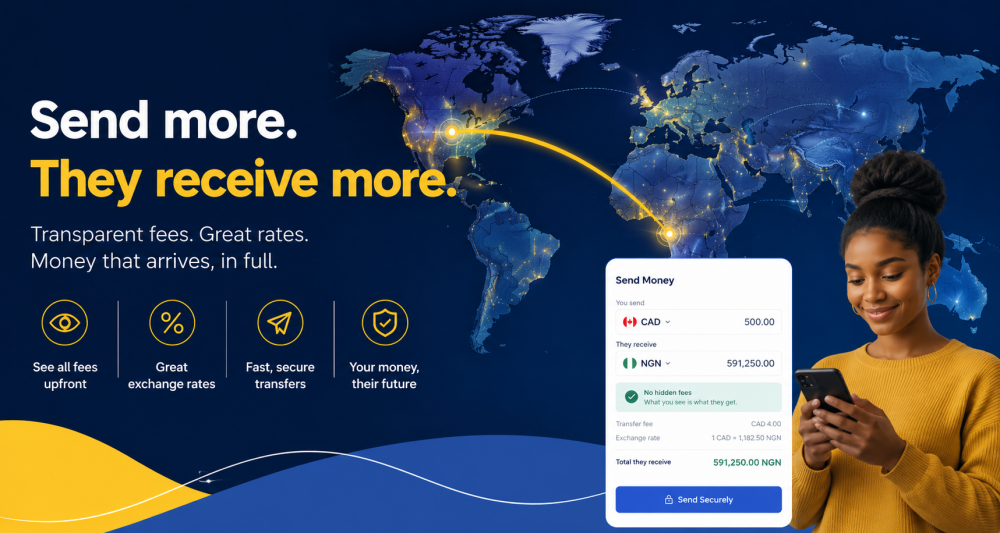
The first thing that struck her was the transfer preview screen. Before she confirmed anything, she could see the exact amount being sent, the live exchange rate being applied, the fee being charged, and the precise amount her mother would receive on the other side. Everything, in one place, before she touched the “Send” button.
No margin hidden in the rate. No correspondent bank surprise waiting at the destination. No receiving fee eating into the final figure. Amara sent her first transfer through HelloMe Money on a Tuesday evening. Her mother confirmed receipt before Amara had finished her tea.
“Everything is here,” her mother said. “All of it.”
Amara smiled. For the first time in three years, she believed her.
The Real Cost of Hidden Fees in 2026: What the Numbers Say
The global remittance market continues to grow, but so does the fee burden on everyday senders. According to World Bank data, the global average cost of sending $200 internationally remains stubbornly high with some corridors still charging over 8% of the transfer value in combined fees.
For the African diaspora specifically, the cost of sending money home has historically been among the highest in the world. A Nigerian professional in Canada or the UK sending money to Lagos can lose a significant portion of every transfer to fees that were never clearly explained.
When you send money every month, those losses compound quickly:
- A 5% hidden margin on a $500 monthly transfer costs you $25 per transaction
- Over 12 months, that is $300 lost to fees alone
- Over three years like Amara’s experience that figure climbs toward $900 or more
This is not a small number. For families relying on remittances for school fees, rent, or medical expenses, every dollar lost to a hidden fee is a dollar that did not reach the person who needed it.
How to Identify Hidden Transfer Fees Before You Send
Whether you use HelloMe Money or any other provider, here is what to look for before confirming any international payment in 2026:
✅ Check the Mid-Market Rate
Look up the live mid-market exchange rate on a neutral source before you send. If your provider’s rate is significantly lower, you are paying a hidden margin. A transparent provider will offer a rate that is close to or at the mid-market rate.
✅ Ask About Correspondent Bank Fees
If you are using a traditional bank, ask explicitly whether any intermediary banks will deduct fees in transit. Many bank staff will not volunteer this information. You have to ask.
✅ Read the Transfer Preview Carefully
A trustworthy platform shows you the exact amount your recipient will receive before you confirm the transfer. If the final figure is only shown after you have already committed to the transaction, treat that as a warning sign.
✅ Look for “No Hidden Fees” Guarantees
Some platforms including HelloMe Money provide complete fee transparency as a core promise, not a marketing line. The fee is shown, the rate is shown, and the recipient amount is shown. What you see is what arrives.
✅ Compare Total Cost, Not Just the Headline Fee
A provider with a £2 upfront fee but a 4% exchange rate margin will cost you far more than one with a £4 fee and a near mid-market rate. Always compare the total cost, calculated against how much your recipient actually receives.
What Transparent International Payments Look Like in 2026
Amara’s story did not end with one successful transfer.
Over the following months, she changed the way she thought about sending money abroad entirely. She stopped treating international payments as an unavoidable source of stress and started approaching them as something she could plan, predict, and feel good about.
With HelloMe Money, she knew:
- Exactly what fee she was paying — shown clearly before every transfer
- Exactly what exchange rate was applied — competitive and close to the mid-market rate
- Exactly what her mother would receive — confirmed before she pressed send
- Exactly when the money arrived — tracked in real time, every step of the journey
She began sending a little more each month, because she knew more of it was actually reaching her mother. She recommended HelloMe Money to her colleagues, her flatmate from Ghana, and her cousin who had just moved to the UK.
“It is not just about the fees,” she told them. “It is about knowing. When you can see everything clearly, sending money feels completely different.”
Why 2026 Is the Year to Stop Overpaying on International Transfers
The technology to make international payments fully transparent has existed for years. In 2026, there is no longer any good reason for senders to pay fees they cannot see, at rates they cannot verify, through processes they cannot track.
The shift is already happening. Modern fintech platforms built for diaspora communities — platforms like HelloMe Money — have made fee transparency the standard, not the exception. Competitive exchange rates, zero hidden margins, real-time tracking, and clear cost previews are no longer premium features. They are baseline expectations.
If you are still using a traditional bank or an opaque money transfer service for your international payments, there is a very good chance you are losing money on every single transfer.
The question is not whether you can afford to switch. The question is whether you can afford not to.
Take Control of Your International Payments Today
Amara’s story is the story of thousands of people in the diaspora who have made one decision that changed the way they send money home.
That decision is simple: stop accepting hidden fees as the cost of sending love across borders.
With HelloMe Money, you can:
- Send money abroad with full fee transparency — see every cost before you confirm
- Access competitive exchange rates — close to the mid-market rate, with no hidden margin
- Track every transfer in real time — know exactly when your money arrives
- Ensure your recipient gets the full amount — no surprise deductions on either end
- Manage your transfers from anywhere — quickly, reliably, and securely
Sign up with HelloMe Money today and make 2026 the year your international payments finally work for you, not against you.
Because the people you are sending to deserve every penny. And so do you.




Leave a Reply